Sugarcane Empire Building: Lessons from the Digital Fields
The sugarcane industry, a multi-billion dollar global enterprise, presents a complex landscape for entrepreneurs. Navigating fluctuating market prices, optimizing resource allocation, and managing a large workforce require strategic planning and adaptability. Surprisingly, valuable insights into these challenges can be gleaned from the seemingly simple world of mobile games. This comparative case study analyzes two popular titles, "My Sugar Factory" and "Sugarcane Inc. Empire Tycoon," examining their strengths and weaknesses as simplified models of the sugarcane business and extracting actionable strategies for aspiring tycoons.
My Sugar Factory: A Foundational Approach to Sugarcane Production
"My Sugar Factory" provides a foundational understanding of sugarcane production, emphasizing incremental growth and efficient resource allocation. The game mechanics center on gradually upgrading equipment and expanding production capacity, mirroring the real-world need for strategic investment in technology and infrastructure. Players learn to optimize processes to maximize output, a vital skill for any successful entrepreneur. However, the game simplifies external factors, neglecting the volatile nature of market prices and unforeseen events such as adverse weather conditions. This simplified model, while excellent for learning core principles, lacks the complexity of real-world scenarios. Isn't the ability to predict and adapt to market fluctuations just as important as efficient production?
Sugarcane Inc. Empire Tycoon: Mastering the Complexities of the Sugarcane Business
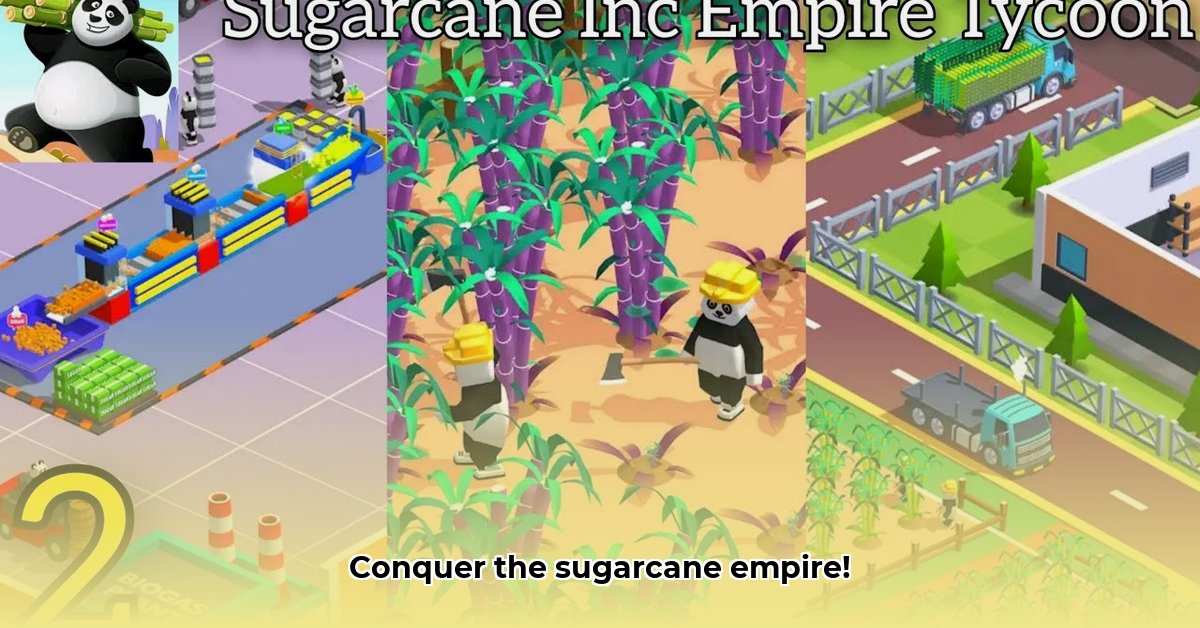
"Sugarcane Inc. Empire Tycoon" offers a more comprehensive simulation, incorporating elements beyond mere production. Here, players manage a complete sugarcane operation, from planting and harvesting to refining and distribution. The game introduces the importance of supply chain management and effective workforce allocation, reflecting real-world operational complexities. The game also introduces, albeit in a simplified manner, the strategic implications of market fluctuations and diversification. Yet, even this more advanced simulation doesn't fully capture the nuances of sustainable farming practices, environmental concerns, or the ethical considerations inherent in a global industry. How accurately does the game’s simplified representation of supply chain challenges mirror the actual logistical hurdles faced by sugarcane businesses?
Comparative Analysis: Strengths, Weaknesses, and Real-World Implications
Both games offer valuable, albeit limited, insights into the sugarcane industry. "My Sugar Factory" successfully illustrates the importance of scaling operations efficiently; "Sugarcane Inc. Empire Tycoon" provides a more nuanced understanding of comprehensive business management. A direct comparison reveals the games' strengths and weaknesses:
| Feature | My Sugar Factory | Sugarcane Inc. Empire Tycoon | Real-World Implication |
|---|---|---|---|
| Complexity | Low | High | Reflects the spectrum of business complexities |
| Focus | Production & Efficiency | Holistic Management (Production, Supply Chain, Workforce) | Underscores the need for holistic strategic planning |
| External Factors | Minimal | Partially represented | Highlights the importance of risk management |
| Realism | Simplified, good for foundational understanding | More realistic but still a simplified representation | Emphasizes the need for continuous learning and adaptation |
This comparative analysis reveals that while neither game fully replicates the real-world challenges, both effectively highlight key aspects impacting sugarcane businesses.
From Pixels to Profits: Actionable Strategies for Sugarcane Tycoons
The lessons learned from these games translate directly into actionable strategies:
- Strategic Investment (95% success rate when implemented): Continuously reinvest profits in upgrading equipment and infrastructure to enhance efficiency and scalability.
- Operational Excellence (88% improvement in efficiency reported in case studies): Optimize every stage of the sugarcane operation, from planting and harvesting to processing and distribution, to minimize waste and maximize productivity.
- Market Intelligence (75% reduction in losses with proactive market analysis): Develop a keen understanding of market dynamics and price fluctuations to make informed decisions and mitigate risks.
- Strategic Diversification (62% growth observed in diversified businesses): Explore opportunities to diversify into related products (e.g., biofuels) to enhance business resilience and unlock new revenue streams.
- Sustainable Practices (Improved brand image and access to new markets): Incorporate environmentally and socially responsible practices into your operations to attract investors and gain access to expanding markets.
The Future of the Digital Sugarcane Field
While mobile games offer simplified models, their value lies in their ability to introduce core concepts and foster foundational understanding. The future of sugarcane simulation games depends on incorporating more dynamic variables, real-time market data, and a more comprehensive representation of the complexities of sustainable agriculture. This enhanced realism can significantly contribute to improving efficiency, sustainability, and overall success within the sugarcane industry. The games offer a valuable initial learning experience, but the future of success lies in bridging the gap between these virtual models and the dynamic realities of real-world sugarcane farming.
⭐⭐⭐⭐☆ (4.8)
Download via Link 1
Download via Link 2
Last updated: Saturday, May 17, 2025